The Java Card Forum is an industry association of companies from the smart card, secure operating system and secure silicon industry, working together to promote and develop Java as the preferred programming language for multi-application smart cards, secure devices and other execution environments.
Java Card Forum member Infineon has launched SECORA™ ID Key S USB, a new Java Card-based security solution designed to support passwordless authentication, digital signatures and PKI applications. The solution combines USB and NFC connectivity with preloaded applets for FIDO authentication, qualified digital signatures and PKI functions. At its core is an open Java Card environment, compliant with Java Card 3.1 and GlobalPlatform 2.3.1, which allows organisations to develop, migrate and deploy their own applets alongside the existing functionality.
This application flexibility enables the same secured hardware platform to be extended beyond authentication and digital signatures, to address use cases including physical access, cold wallets and software rights management. Java Card also helps simplify the development and deployment of these additional services. Infineon provides a Java Card development environment and configuration tools enabling customers to create custom applets and personalise the onboard operating system. The launch demonstrates how Java Card continues to provide a secured, interoperable and adaptable foundation for identity and authentication solutions – allowing new services to be introduced without requiring a completely new hardware platform.
Engineering samples are available now, with volume production expected to begin in September 2026.
Digital cash is increasingly seen as a critical complement to existing forms of money, particularly in the forms of Central Bank Digital Currencies (CBDCs) or as an add-on to established payment schemes.
Unlike account-based digital payments, digital cash replicates essential properties of physical cash: it must be offline-capable, fungible, privacy-preserving, and peer-to-peer transferable.
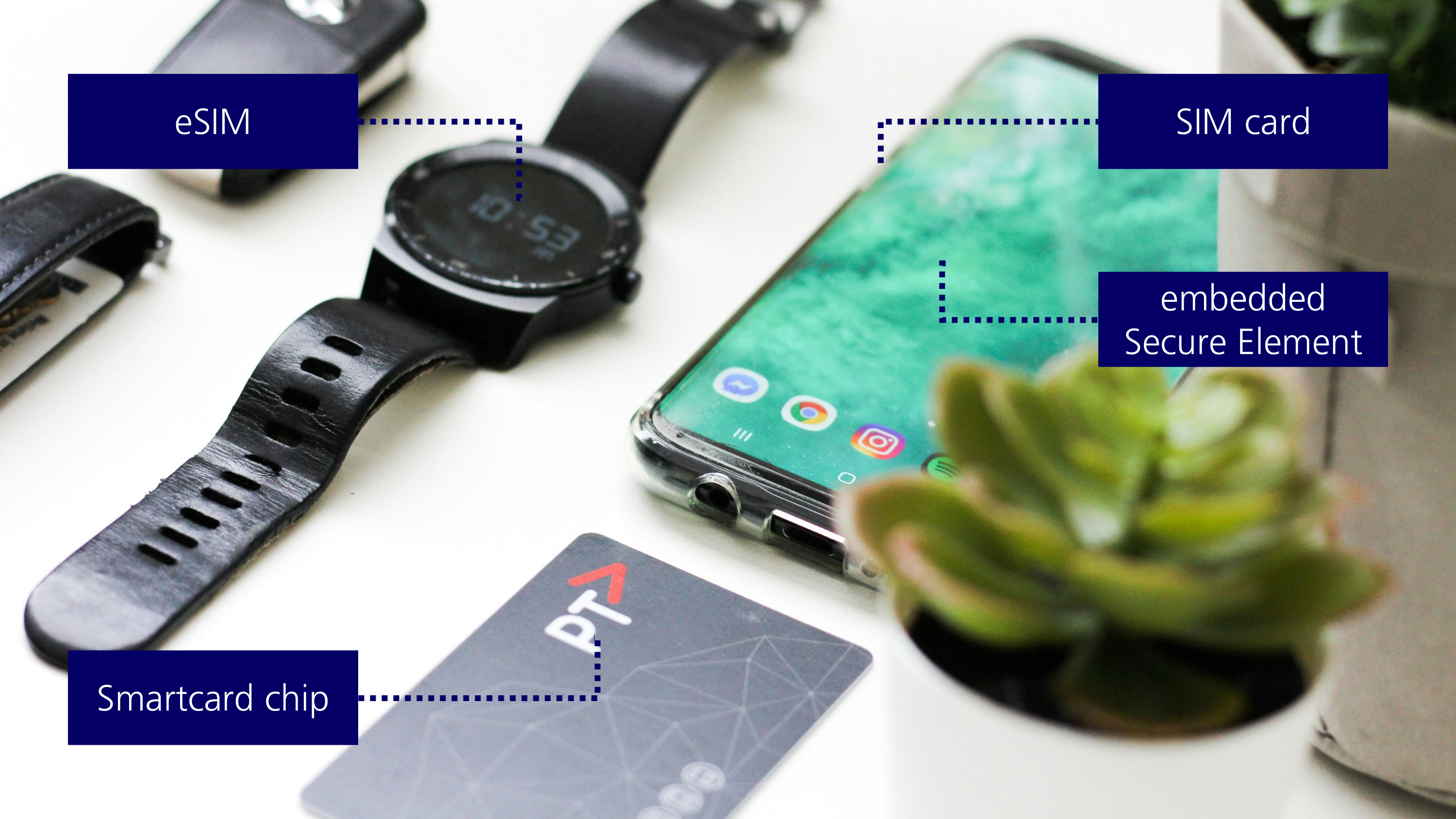
Meeting these requirements places strong demands on the underlying technology; especially on the wallets that allows user to manage and transact their digital cash. Those wallets can come in many form factors, such as cards, smartphones, or wearable devices.
This is where Java Card technology plays a key enabling role.
Secure hardware for offline trust
As explained above, digital cash must function without continuous online connectivity. In offline scenarios, fraud prevention cannot rely on real-time backend checks; instead, trust must be anchored in tamper-resistant hardware, so-called Secure Elements (SEs).
Java Card has a long history as the execution environment for SEs used in many applications ranging from payments to identity, provided by a variety of stakeholders both from the public and the private sector. Industry’s substantial experience in using Java Card to protect critical assets positions it as a suitable platform to safeguard digital cash against cloning, manipulation, and unauthorized extraction.
Strong cryptography and PKI integration
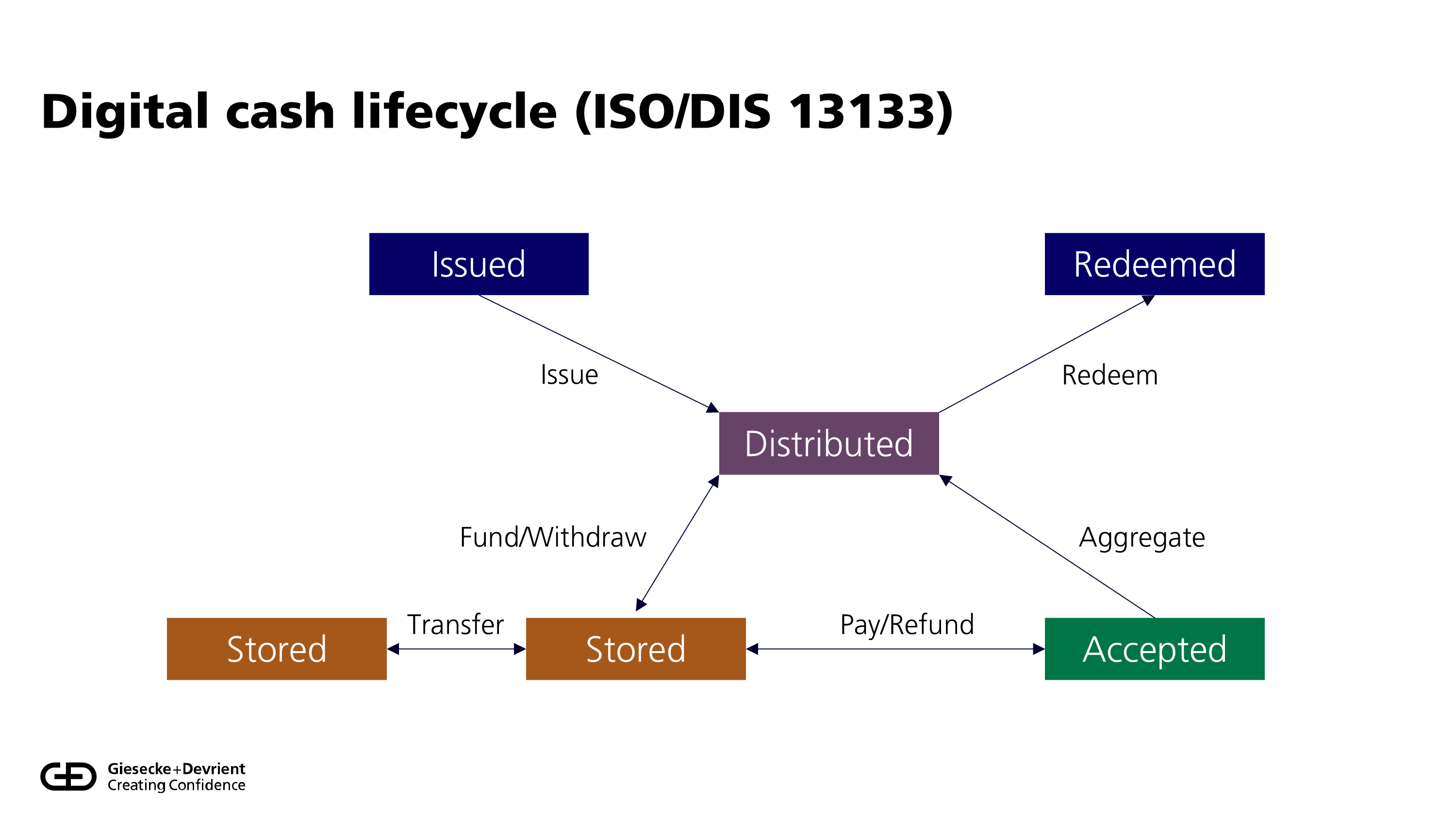
Digital cash heavily depends on public key infrastructure (PKI) to authenticate issuers, wallets, intermediaries, and merchants. Java Card provides standardized cryptographic APIs and key management mechanisms that fit neatly with this architecture. This allows system operators to preserve the integrity of digital cash across its lifecycle: secure issuance, storage, transfer, and redemption.
Lifecycle control and wallet integrity
But not only the digital cash follows a lifecycle, the wallets do too. For example, user onboarding may be delegated to multiple payment service providers, as reflected in emerging standards like ISO 13133. Java Card’s application model supports secure state transitions and policy enforcement within the SE, helping issuers maintain confidence in wallet integrity even in long-lived offline scenarios.
Privacy by design
Like physical cash, digital cash must respect users’ privacy, while still allowing issuers to remain the ultimate authority. Java Card enables this balance by allowing sensitive credentials and cryptographic operations to remain confined within certified hardware, reducing data exposure and supporting privacy-respecting designs without sacrificing security.
Future readiness
Digital cash systems should stay resilient against the backdrop of cryptographic transitions (PQC) and evolving regulatory requirements. Java Card’s modular, standards-based architecture allows wallets and tokens to evolve independently of hardware, supporting updates and extensions without requiring a complete redesign of secure devices.
In summary, digital cash demands the same level of trust, durability, and security historically associated with physical cash. Java Card provides a proven, standardized, and future-ready platform that enables secure offline operation, strong cryptographic protection, controlled lifecycles, and preservation of privacy, making it a natural foundation for digital cash implementations.
You can find out more about Giesecke+Devrient’s solutions in this area here.
Written by Dr. Lars Hupel Chief Evangelist, Central Bank Digital Currencies Giesecke+Devrient



You must be logged in to post a comment.